Succession planning in fire and life safety is not a distant concern. It is an active business decision that shapes continuity, enterprise value, and long-term stability.
The 2023 SDM 100 Report highlights a reality many owners already feel: a significant share of independent fire and security contractors remain founder-led, and many are approaching retirement without a formal transition plan in place. That gap carries real consequences for employees, for customers, and for the lasting strength of the business itself.
At Sciens Building Solutions, we see four areas that can help strengthen succession planning in this market: leadership depth, documented processes, financial clarity, and cultural alignment. For many business owners, these areas develop gradually over time, and each can provide a helpful starting point for preparing the company’s future.
Leadership Depth: Building Beyond the Founder
Strong fire and life safety companies do not depend on a single individual to drive results. They build the next generation of leaders with intention, investing in technical expertise, structured training programs, and leadership development long before a transition is on the table.
When leadership depth exists, a business can weather change, whether that is a planned retirement, an unexpected departure, or a period of rapid growth. Customers and employees alike benefit from knowing that the company’s capabilities extend well beyond the founder.
The companies best positioned for long-term success are those that treat leadership development as an ongoing priority, not a last-minute exercise. That means identifying high-potential team members early, giving them increasing responsibility, and creating pathways for them to grow into decision-making roles. A business that can operate effectively without its founder in the room every day is a business that is ready for whatever comes next.
Sciens works with companies to establish those development paths and structured training so leadership depth is realized well before a transition.
Documented Processes and Transferable Systems
A business is only as resilient as its systems. When critical workflows, customer relationships, and service protocols live solely in the owner’s head, the organization carries significant risk, especially during a transition.
Good succession planning requires documented, repeatable processes across every part of the operation:
- Standardized service delivery that ensures consistent quality regardless of which technician is on site
- CRM discipline that captures customer history, contract details, and communication in a centralized system
- Repeatable operating procedures for inspections, installations, monitoring, and maintenance
- Clear workflows for quoting, scheduling, dispatching, and billing
These systems do more than reduce risk. They make a business more scalable, more efficient, and significantly easier to transition, whether the goal is internal succession, a strategic partnership, or an outright sale. Prospective partners and buyers look for businesses that can demonstrate operational maturity, and documented processes are one of the clearest signals of that maturity.
Sciens helps clients document workflows and implement transferable systems so knowledge is not trapped with a single individual.
Financial Clarity: Clean Books and Recurring Revenue
Financial transparency is foundational to any successful transition. Clean books, reliable reporting, and a clear picture of revenue composition are not optional. They are baseline expectations for any serious conversation about the future of a business.
In fire and life safety, recurring revenue streams are particularly important. Monitoring contracts, inspection agreements, service plans, and other contracted revenue create predictable cash flow and are often the primary drivers of enterprise value. Buyers and strategic partners want to see not just top-line growth, but the quality and durability of the revenue behind it.
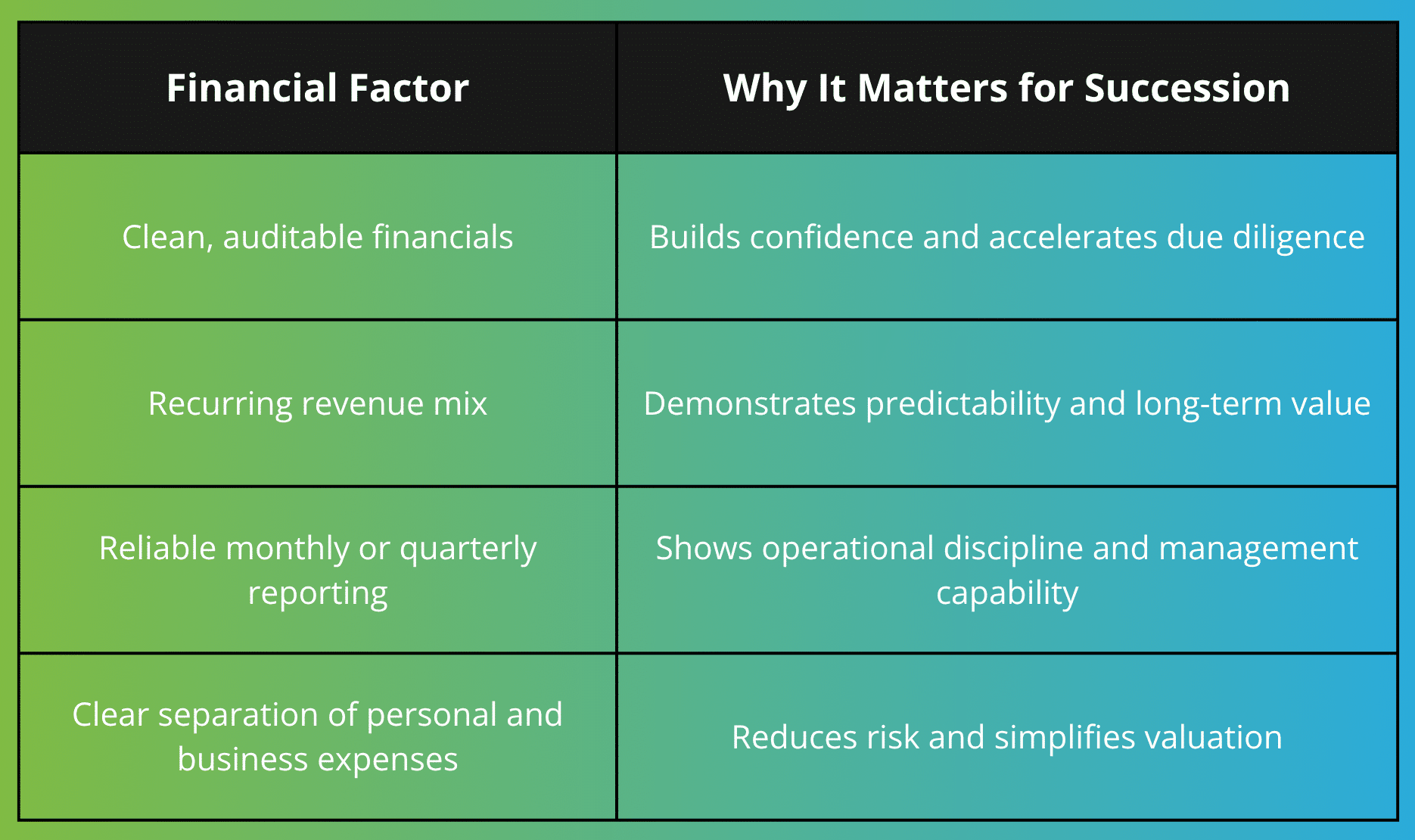
Owners who maintain financial clarity throughout the life of their business, not just when a transaction is imminent, give themselves far more flexibility when it comes time to explore their options.
Sciens advises owners on presenting clean, auditable financials and highlighting recurring revenue drivers to improve valuation and buyer confidence.
Cultural Alignment: Choosing the Right Partner
Selling or transitioning a business is more than a financial decision. It is a decision about who will lead your employees, serve your customers, and carry your reputation forward. The strongest partnerships are built on shared values, not just favorable economics.
Cultural alignment means finding a partner who respects what you have built: the relationships, the standards, and the commitments that define your company. It means asking hard questions about how employees will be treated, how customers will be served, and whether the partner’s vision for the future is compatible with the legacy you want to protect.
At Sciens Building Solutions, we understand that every owner’s situation is different. Some are thinking seriously about retirement. Others are focused on growth and looking for the resources to get there. Many are simply beginning to explore what a transition might look like. Whatever the motivation, the right succession plan should feel like a natural next step that strengthens the business rather than disrupts it.
We prioritize preserving service quality and employee opportunities when advising on transitions.
The fire and life safety market will continue to evolve, and the companies that plan thoughtfully for transition will be the ones that endure. Whether you are years away from a decision or ready to start a conversation today, the fundamentals remain the same: invest in your people, document your processes, maintain financial discipline, and choose partners who share your values.