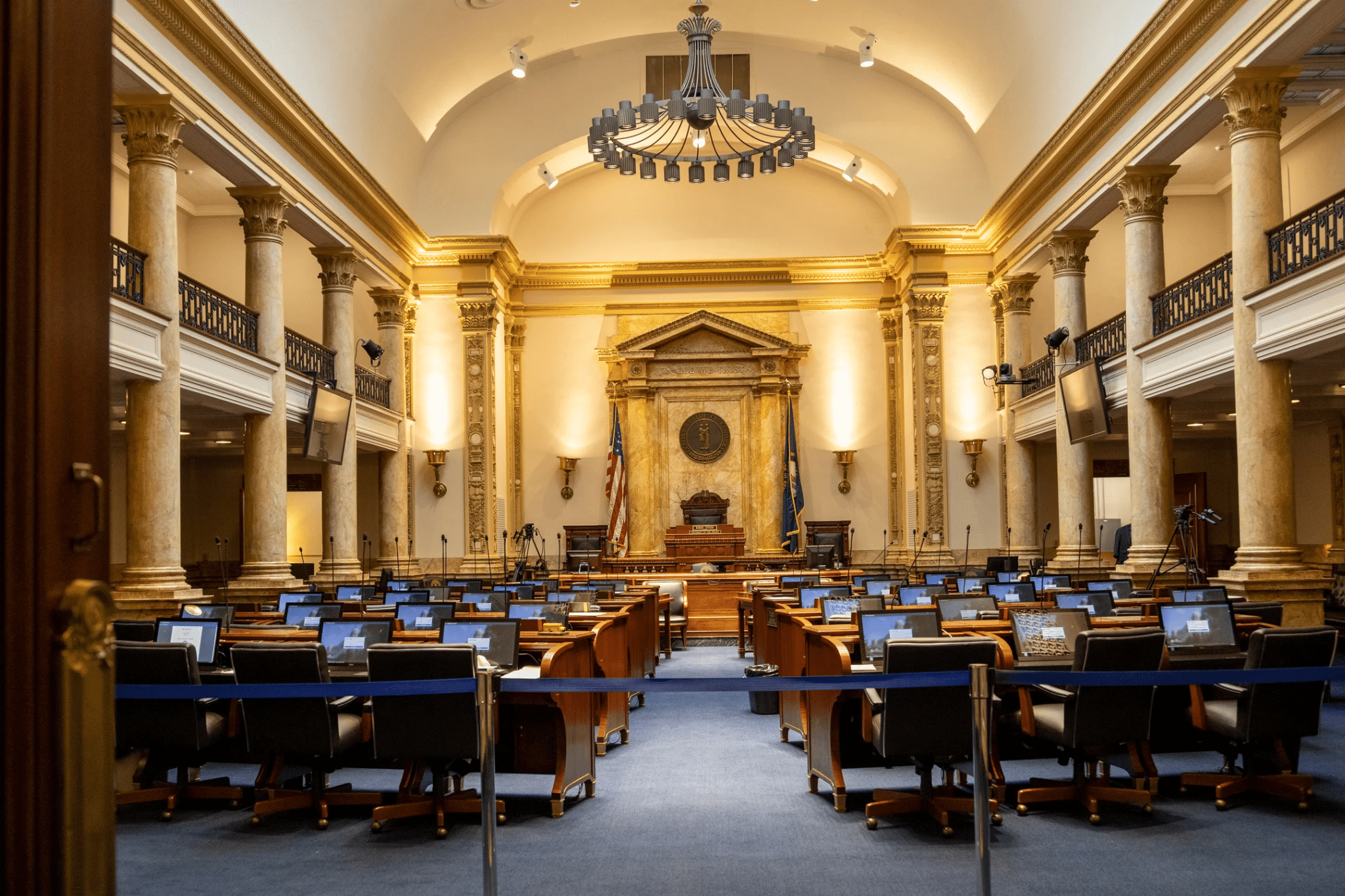
Federal capital planners do not have enough funding to address every fire and life safety deficiency at once. When dozens of buildings across a portfolio show aging suppression systems, overdue inspection items, or outdated alarm panels, the question is where to invest first. An objective risk-scoring model removes politics and gut feeling from that decision and creates an auditable record. It replaces anecdotal urgency with repeatable, defensible criteria tied to occupancy characteristics, authority having jurisdiction (AHJ) compliance history, and verified system condition. The result is a prioritized capital list that reduces liability exposure, protects mission-critical operations, and stands up to audit scrutiny. Below is a framework capital planning managers can adapt to their own portfolios immediately.
What makes a public building high risk
Not every aging facility carries the same level of consequence if a fire or life safety system fails. High risk is a function of who occupies the building, what mission it supports, and how its systems have performed over time.
Occupancy and vulnerable populations: Buildings with high daily occupant counts, courthouses, VA medical centers, social services offices, carry outsized consequence in an emergency. Facilities serving people with limited mobility or cognitive awareness, such as detention centers, hospitals, and childcare operations within federal campuses, raise the stakes further. NFPA 101, the Life Safety Code, assigns stricter requirements to these occupancy types because evacuation is slower and more complex.
Critical mission functions: A regional data center, an emergency operations center, or a facility housing irreplaceable records cannot tolerate extended downtime. When fire protection failures force an evacuation or shutdown, the disruption cascades beyond the building itself.
Past inspection failures: A building that has repeatedly failed AHJ inspections or accumulated open deficiency items is statistically more likely to experience a system failure during an actual event. Chronic noncompliance signals both physical deterioration and institutional neglect, two conditions that compound each other.
Any building that checks more than one of these boxes deserves close evaluation through a structured scoring model rather than a subjective conversation about which facility “seems” most urgent.
Scoring model components
A defensible prioritization model scores each building across five dimensions. Each dimension captures a distinct aspect of risk, and weighting them allows agencies to reflect their own mission priorities.
Physical condition of fire and life safety systems
This dimension evaluates the current operational state of suppression, detection, alarm, and egress systems. Factors include equipment age relative to manufacturer-rated service life, the presence of obsolete components that can no longer be serviced or sourced, corrosion in sprinkler piping, and battery or panel condition for fire alarm systems. A building with a wet-pipe sprinkler system installed in the 1970s and never internally inspected per NFPA 25 requirements scores differently than one with a recently commissioned system.
Code compliance history
Pull the AHJ inspection record for each facility. Count the number of open deficiencies, the severity classification of each finding, and the elapsed time since each was first cited. Repeat violations on the same system indicate a systemic maintenance failure, not a one-time oversight. Buildings operating under variances or equivalencies that were granted years ago and never revisited also warrant higher scores, since the conditions that justified those variances may no longer hold.
Redundancy of life-safety systems
Some buildings have layered protection, automatic suppression, addressable detection, voice-evacuation notification, and smoke-control systems working in concert. Others rely on a single system, perhaps only a fire alarm with no suppression, to protect occupants. The fewer independent layers of protection, the higher the consequence of any single system failure. Score buildings with minimal redundancy higher on this dimension.
Evacuation complexity
Evaluate the number of floors, stairwell capacity relative to occupant load, the presence of areas of refuge for occupants with disabilities, and the distance from the most remote point to the nearest exit. High-rise buildings, facilities with below-grade occupied spaces, and structures with limited exterior access for fire department operations all increase evacuation difficulty. Where occupant loads exceed the rated egress capacity identified during the last fire drill or occupant-load analysis, the score should reflect that gap.
Criticality of mission
This dimension is agency-specific. Assign a criticality tier to each facility based on continuity-of-operations planning (COOP) designations, national security implications, or service-delivery impact. A Tier 1 facility whose loss would immediately degrade a core federal function scores higher than a Tier 3 administrative office that could relocate within days.
|
Dimension |
Example scoring inputs |
Suggested weight range |
|
|
Physical condition |
Equipment age, obsolescence, internal inspection results |
20–30% |
|
|
Code compliance history |
Open deficiencies, repeat violations, elapsed time |
15–25% |
|
|
System redundancy |
Number of independent protection layers |
10–20% |
|
|
Evacuation complexity |
Floors, egress capacity, areas of refuge |
10–20% |
|
|
Mission criticality |
COOP tier, service-delivery impact | 15–25% |
Calibrate weights to agency priorities, then apply the same calculation to every facility so comparative scores are meaningful.
Data collection and normalization
What to gather
The scoring model is only as reliable as the data behind it. Two NFPA standards anchor the inspection and testing data most relevant to this exercise:
- NFPA 25 (Inspection, Testing, and Maintenance of Water-Based Fire Protection Systems) specifies the frequency and scope of inspections for sprinkler systems, standpipes, fire pumps, and water storage tanks. Pull records for quarterly, annual, and five-year inspection cycles. Pay particular attention to internal pipe inspections, fire pump flow tests, and the status of any impairments that were opened but never formally closed.
- NFPA 72 (National Fire Alarm and Signaling Code) governs inspection, testing, and maintenance of fire alarm and detection systems. Collect annual inspection reports, sensitivity testing results for smoke detectors, and documentation of any devices that failed functional testing.
Beyond these two standards, gather records from fire door inspections (NFPA 80), emergency lighting and exit sign testing, and any AHJ correspondence, such as notices of violation, variance letters, or abatement agreements.
Normalizing across jurisdictions
Federal portfolios often span multiple AHJ boundaries, each with its own inspection cadence and severity-classification scheme. To compare buildings fairly:
- Map each AHJ’s deficiency categories to a common severity scale, for example critical, serious, minor.
- Standardize inspection dates to a common timeline so that a building last inspected six months ago is not unfairly compared to one inspected last week.
- Where a facility has no recent inspection record at all, treat the absence of data as a risk indicator in itself and assign a default elevated score for that dimension.
Centralize this information in a single asset management platform, rather than scattered spreadsheets, to make annual rescoring practical and auditable. Platforms such as Sciens are commonly used to store inspection records, scoring inputs, and audit trails in a single source of truth.
Decision rules for capital sequencing
Raw scores need to translate into actionable capital categories. Establish three threshold bands that drive different planning responses.
Immediate remediation (score above the critical threshold). Buildings in this band have active life-safety impairments, imminent code violations, or conditions that place occupants at unreasonable risk. These projects enter the current fiscal year’s execution plan. Funding may come from emergency repair accounts, reprogramming authority, or risk-mitigation reserves. The goal is to restore minimum acceptable protection within months, not years.
Scheduled capital within one to three years (score in the elevated band). These facilities have significant but not immediately dangerous deficiencies, aging systems approaching end of service life, moderate compliance gaps, or limited redundancy. They belong in the next one to three budget cycles with defined scope, cost estimates, and design milestones. Placing them on a published schedule creates accountability and prevents them from drifting into the critical band through inaction.
Long-term planning (score below the elevated threshold). Buildings in this band may need system modernization eventually, but current conditions are manageable through routine maintenance. Include them in five-year capital plans and rescore annually to detect deterioration early.
Document these thresholds in a written policy approved by agency leadership so capital planners have a formal basis to resist pressure to override the model for politically favored projects.
Stakeholder alignment
Presenting the prioritized list to agency leadership
Senior leaders respond to risk exposure and mission impact, not technical jargon. Frame the prioritized list in terms they care about:
- Which buildings pose the greatest liability if a fire event occurs before remediation?
- Which mission functions are at risk of interruption?
- What is the cost of deferral, not just in dollars, but in regulatory exposure and potential loss of occupancy permits?
Present the scoring methodology alongside the results so leadership understands that sequencing reflects objective criteria, not individual advocacy. A one-page summary showing each building’s composite score, the top-weighted risk factors, and the recommended capital band is more effective than a 40-page technical report.
Public accountability and AHJ communication
For facilities open to the public, transparency about capital investment priorities builds trust. Sharing the scoring framework, without exposing security-sensitive details, shows the agency is managing risk systematically rather than reactively.
Communicating proactively with the AHJ matters. When an agency can show an AHJ a scored portfolio with a funded remediation timeline, inspectors are far more likely to work collaboratively on abatement schedules than when they encounter an agency that appears to have no plan at all. That collaborative posture can influence the terms of any compliance agreements or consent orders.
Converting a high-score building into an approved capital project
Consider a regional federal courthouse that scores in the critical band. Its fire alarm system uses a legacy panel that the manufacturer no longer supports, smoke detectors have failed sensitivity testing in multiple zones, and the AHJ has issued two consecutive notices of violation. Evacuation drills have revealed that stairwell capacity is inadequate for the building’s current occupant load.
Step 1: Validate the score. A qualified fire protection engineer conducts a condition assessment to confirm the scoring inputs and identify any conditions the data may have missed. This assessment produces a deficiency report with cost-of-correction estimates.
Step 2: Define scope and budget. Based on the assessment, the project team develops a scope of work, full fire alarm system replacement, addressable detection throughout, integration with the building’s mass notification system, and stairwell pressurization upgrades. The cost estimate is aligned to the agency’s capital budgeting format and submitted with the risk score as justification.
Step 3: Secure funding approval. The capital planner presents the project to the investment review board using the scoring model output, the engineer’s deficiency report, and a timeline showing the consequence of deferral, such as continued AHJ violations, potential loss of certificate of occupancy, and mission disruption. The project is approved for the next fiscal year.
Step 4: Procurement and execution. The agency issues a solicitation for design-build or design-bid-build services, depending on project complexity and procurement authority. The contract includes commissioning requirements tied to NFPA 72 acceptance testing criteria, ensuring the new system is fully functional before the agency takes beneficial occupancy.
Step 5: Close the loop. After project completion, the building is rescored. Its composite risk score drops, the AHJ violations are formally closed, and the updated score is recorded in the portfolio database. The audit trail, from initial score through funding approval through verified completion, is preserved for future budget justification and inspector reference.
Adopting this framework gives capital planners a repeatable way to sequence projects, a transparent record that links budget decisions to measured risk reduction, and an annual process that keeps the portfolio’s highest-risk buildings from being overtaken by lower-priority political requests. The model does not require proprietary software or exotic data, it requires discipline, consistent application, and applying the scoring results. If you score facilities and then do nothing, you created paperwork, not risk reduction.